

Carbon Capture & Storage

Accelerating deployment, de-risking & infrastructure build-out
Setting the scene
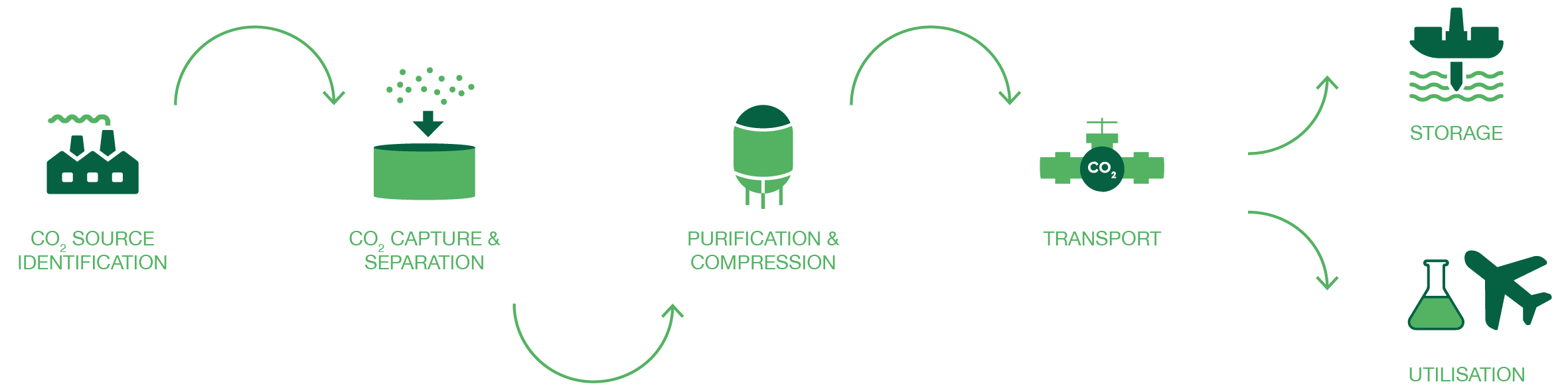
Figure 1: Carbon Capture and Storage (CCUS) value chain.
Carbon capture, utilization and storage (CCUS) is a key option within the portfolio of decarbonization pathways identified by the IPCC, particularly for hard-to-abate sectors and for achieving net-zero emissions (IPCC, 2023). The CCUS value chain includes CO2 capture from industrial point sources such as ammonia or cement plants, as well as more dilute sources, and can address both fossil and biogenic emissions.
In the TIMES-Be model, only CO2 emissions are considered, while other greenhouse gases (GHG) are not included. The analysis covers net CO2 emissions from the energy sector (including fuel combustion and fugitive emissions from fuels), industrial processes and product use (IPPU), and waste. Emissions from international aviation and maritime bunkers are also included. Sectors such as agriculture and land use, land-use change and forestry (LULUCF) are not represented in the model. Table 1 presents a sectoral breakdown of these emissions based on European Environmental Agency data (EEA, 2026).
| GHG category | 2024 net CO2 emissions [Mt] |
| 1. Energy | 71.5 (99.0) |
Fuel combustion | 71.4 |
Fugitive emissions from fuels | 0.1 |
International bunkers - Aviation | (5.8) |
International bunkers - Navigation | (21.7) |
| 2. Industrial Processes and Product Use (IPPU) | 13.5 |
| 3. Waste | 0.4 |
| Total | 85.4 (113) |
Table 1: Net CO2 emissions in MtCO2 by sector covered in the TIMES-Be model for Belgium in 2024 (EEA, 2026)
Several capture technologies are commercially available, including chemical absorption, physical solvents, adsorption, membrane separation and cryogenic, while others remain under development (JRC, 2024). After capture, CO2 is purified, compressed and transported (typically via pipelines, ships or trucks) to storage or utilization sites. Long-term storage generally occurs in geological formations such as depleted oil and gas fields and deep saline aquifers, while CO2 utilization pathways remain limited and are not analysed in detail in this report.
CCUS can also enable negative emissions through bioenergy with CCS (BECCS) and direct air capture (DAC), although DAC remains less mature and more costly than point-source capture. In this study, DAC is not deployed in Belgium, as it is more likely to be developed in regions with abundant low-cost renewable energy and suitable CO2 storage conditions. Large-scale deployment ultimately depends on the coordinated development of capture, transport and storage infrastructure.
CCUS is increasingly reflected in European and Belgian policy frameworks. At EU level, CCS and CCU are positioned within broader industrial decarbonization strategies and coordinated through initiatives such as the Strategic Energy Technology Plan (SET Plan) working group on CCS-CCU (European Commission, 2024).
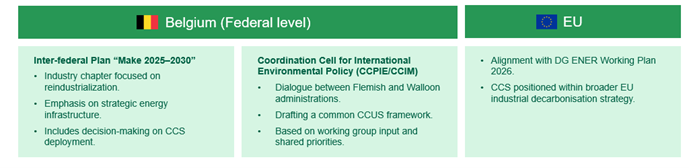
In Belgium, coordination between federal and regional authorities takes place through mechanisms such as the Coordination Committee for International Environmental Policy (CCIEP), which aligns national positions in European and international negotiations (FPS Health, 2024). In addition, the Inter-federal industrial strategy “Make 2025–2030” highlights the role of strategic energy infrastructure and industrial transformation in strengthening competitiveness and supporting the low-carbon transition (FPS Economy, 2026).
Scope of work
This deep-dive builds on the PATHS2050 results (Main Edition 2025 – Sensitivity Analyses 2025) and explores in more detail the role of CCUS and its implications for energy system costs across different scenarios and sensitivity analyses.
Achieving CO2 neutrality from energy combustion and industrial process emissions in Belgium, while maintaining current industrial activity, is challenging. Particularly for sectors with process-related CO2 emissions that cannot be mitigated by means of electrification or fuel switching alone. In the TIMES-Be model, CCS and CO2 utilization (CCU) represent the main technological options to address these process emissions, with any remaining emissions covered through carbon pricing via the purchase of allowances.
To assess the sensitivity of the energy system to CO2 storage availability, several levels of storage access are explored within the ROTORS scenario. The original ROTORS scenario, or reference case (Ref), assumes a progressive expansion of storage access, increasing linearly from 1.4 MtCO2/y in 2030 to 10 MtCO2/y in 2050, reflecting the gradual development of CO2 transport and storage infrastructure. An unlimited storage case (High) illustrates the potential role of CCS if storage capacity and transport infrastructure would not be constrained. At the other extreme, a strongly constrained case limits storage access to 1 MtCO2/y, representing a situation with major infrastructure, regulatory, or cross-border limitations (Low).
KEY TAKEAWAYS
-
To reach carbon neutrality, CCS is required to mitigate emissions from hard-to-abate, CO2-intensive industries. As such the investment in CO2 infrastructure is an urgent, no-regret priority
-
CCS deployment starts with ammonia, ethylene oxide, cement and steel
around 2030 and expanding to additional sectors after 2040
-
Upscaling & De-risking
CO₂ infrastructure must scale to around 20 MtCO₂/year by 2050. Early investment requires sufficiently de-risked projects.
-
+3.5 b€ per year
additional system costs by 2050, if CO2 storage is limited to 1 MtCO2/a (vs 10 MtCCO2/a)

What is Belgium’s overall carbon management pathway?
Belgium’s carbon management pathway toward 2050 relies on the gradual development of an integrated CCUS system combining CO2 capture, utilization and storage. The balance between CO2 use and geological storage depends strongly on access to storage capacity.
Figure 2: Evolution of CO2 captured, utilized, and stored under different CO2 storage access scenarios between 2030 and 2050 for ROTORS
In the reference case (Ref), total CO2 capture increases progressively over time, reaching around 14 MtCO2/y in 2050. Most of this captured CO2is allocated to geological storage, until the 10 MtCO2/y storage cap is reached.
When CO2 storage access is unconstrained (High), total captured volumes increase significantly and a larger share of CO2 is directed toward geological storage, particularly after 2040. In this case, storage becomes the dominant destination for captured CO2, while reliance on CO2 utilization remains more limited.
Conversely, when access to storage is strongly constrained (Low), the system relies heavily on CO2 utilization. By 2050, almost all captured CO2 is used (around 11 MtCO2/y) rather than stored. While CCU potential is limited for process emissions (around 4 MtCO2), it provides a relatively low-cost abatement option in other sectors. However, this result should be interpreted with caution, as it may not be fully aligned with current regulatory frameworks, which restrict the use of fossil CO2 for certain CCU pathways.
Overall, the results show that the scale and role of CCU in Belgium depends strongly on access to CO2 storage infrastructure, which determines whether captured CO2 is primarily stored or redirected toward utilization pathways.
What role could carbon capture play across industrial sectors?
CCS deployment is concentrated in a limited number of hard-to-abate industrial sectors with large and relatively concentrated CO2 flue gas streams. In the early years (2030–2035), CO2 capture occurs mainly in ammonia, ethylene oxide, cement and steel, reflecting the presence of large industrial point sources where capture technologies are technically feasible (IEA, 2020).
As CO2 storage availability increases, CCS deployment increases significantly after 2040 and expands to other sectors. Cement and steel remain major contributors, while additional capture appears in chemical processes, refineries, lime production, brick production and hydrogen generation. In the high-storage scenario, total captured CO2 reaches around 20 MtCO2/y by 2040–2045, indicating a broad uptake of CCS across heavy industries.
In 2050, captured volumes in the high-storage case decrease slightly in several sectors, reflecting a transition toward low-carbon production pathways. Capture in ammonia falls (around 1 MtCO2/y) and steel-related capture also declines (around 0.7 MtCO2/y), as production shifts to routes that largely avoid CO2 emissions, reducing the need for CCS. Capture in refineries decreases (around 0.65 MtCO2/y), reflecting assumptions of reduced refinery activity by 2050.
In contrast, when access to CO2 storage is constrained, capture levels remain significantly lower and deployment is limited to a smaller number of sectors. However, by 2050 captured volumes increase again as part of the CCU value chain, particularly to produce synthetic fuels and feedstock such as methanol. Overall, Figure 3 shows that CO2 storage availability strongly influences both the scale of CCS deployment and the range of sectors able to implement capture technologies over time.
In addition, CCS deployment is shaped by policy assumptions, particularly for hydrogen production. Under the European Renewable Energy Directive III (RED III), domestic blue hydrogen production is disincentivized reducing associated CO2 capture volumes. Even with unconstrained CO2 storage, low-carbon hydrogen remains limited because REDIII mandates a minimum share of renewable (RFNBO) hydrogen in industry. This raises the cost of additional hydrogen supply and makes it economically unattractive, as any incremental consumption must be met with a compliant mix of low-carbon and renewable hydrogen at system level. Relaxing these requirements allows blue hydrogen to play a direct role as early as 2035, increasing captured CO2 volumes and the need for transport infrastructure (see also the Molecule Executive Summary).
Figure 3. Sectoral CO₂ capture volumes (MtCO2/y) under different CO2 storage availability scenarios. Results are shown for ROTORS and include emissions captured for both storage and usage
How much will CCS cost and who will ultimately pay for it?
CCS cost is primarily driven by CO2 capture at industrial facilities and by cross-border transport and storage. Capture costs vary significantly across sectors, depending on process characteristics and CO2 concentration levels.
Average CCS costs are determined endogenously in the model and evolve over time with deployment levels and infrastructure development (Figure 4). These costs reflect the full CCS value chain, including capture, transport, and storage. However, within the TIMES framework, transport and storage costs are modelled as proportional to captured volumes, meaning that economies of scale are not explicitly represented. In addition, these estimates consider only CO2 flows originating from Belgian emitters.
If Belgium were to develop as a CO2 transit hub handling additional international flows, the scale of domestic infrastructure (and the associated total costs) could increase accordingly. In practice, however, higher transported volumes could reduce the infrastructure cost per ton of CO2 through economies of scale.
Figure 4. Evolution of average CCS value chain costs in the ROTORS scenario, forecast EU ETS price from ABN AMRO (optimistic scenario) and modelled carbon price (2024 €/tCO2).
Early deployment phase (2030–2035)
In the early years, CCS remains difficult to finance solely through carbon pricing. Projected EU ETS prices (around €123–125/tCO2 in 2030 and €148–162/tCO2 in 2035, constant euros 2024) remain below the modelled system cost of CCS. This creates an investment gap, which could be addressed through mechanisms such as carbon contracts for difference (CCfDs).
During this phase, transport and storage infrastructure (particularly cross-border networks) represent a significant share of total CCS costs (~70% in 2030 and ~65% in 2035), reflecting the need to develop infrastructure before large volumes of CO2 are captured2.
Toward a near-full decarbonised system (2040-2050)
Average CCS value chain costs decrease over time, mainly driven by reductions in cross-border transport and storage costs. By 2050, costs increase again as the system reaches near full decarbonization, with only 2 MtCO2/y of residual emissions allowed, i.e., a binding emission constraint requiring the system to fully abate remaining CO2 emissions. As a result, higher-cost carbon capture options are deployed to eliminate residual CO2 emissions, including in hard-to-abate sectors.
Infrastructure scaling and deployment risks
As CCS deployment expands, the average cost of cross-border transport and storage per ton of CO2 decreases over time. This is primarily driven by cost reductions in storage as deployment scales up. While higher utilization of shared infrastructure can reduce the average cost of transport by spreading fixed costs over larger CO2 volumes, transport costs per ton remain relatively stable.
In the early deployment phase, however, capture facilities and transport networks may operate below full capacity, leading to higher average costs as fixed investments are spread over limited volumes. This creates a first-mover disadvantage, where early adopters face higher costs while the CO2 transport and storage infrastructure is still scaling up.
This highlights the need for targeted government support to facilitate early CCS deployment and the importance of coordinated planning of CO2 capture projects (AKT & VOKA, 2025), including alignment with domestic blue hydrogen production and cross-border cooperation to attract CO2 flows and maximise infrastructure utilisation (see also Molecules Executive Summary).
Who ultimately pays?
Because CO2 storage generates limited direct market revenues, dedicated regulatory frameworks and public support mechanisms are typically required to finance transport networks, storage development and long-term stewardship (UNECE, 2022). These may include carbon contracts for difference (CCfDs), regulated infrastructure models, first-mover protection mechanisms such as volume guarantees, or other risk-sharing mechanisms.
Overall, cost-effective CCS deployment depends on coordinated development of capture, transport and storage infrastructure, enabling industrial emitters to share networks and reduce costs through infrastructure mutualization. This also requires cross-sector coordination between existing industrial CO2 emitters and emerging low-carbon hydrogen production (e.g. blue hydrogen), to maximize synergies and ensure efficient use of shared infrastructure.
What happens if CO2 storage is limited?
CCS remains a critical mitigation option for hard-to-abate sectors such as cement, lime, steel, refineries, and parts of the chemical industry. The ROTORS results show that limiting CO2 storage strongly affects both system costs and technology choices. Under a comparable industrial structure, restricting storage capacity to 1 MtCO2/y increases total system costs in 2050 by around €3.5 billion annually (in constant 2024 euros). Paying for the entire chain of CO2 capture and storage costs approximately 2 b€ per year, but this is offset by avoided energy system costs amounting to 5.5 billion.
These additional costs do not represent the cost of CCS itself, but rather the economic cost of limited storage access, which reduces system flexibility. When CCS deployment is constrained, residual process emissions must be addressed through more expensive mitigation options, including further electrification and fuel switching where feasible, increased CO2 utilization (CCU), higher imports of renewable fuels of non-biological origin (RFNBOs) such as green hydrogen and e-methane, or ultimately through higher carbon prices paid.
What are the implications for CO2 transport abroad and transit flows?
As CCS deployment expands, cross-border CO2 transport will become an important component of carbon management, allowing captured CO2 to be transported from industrial regions to storage sites where suitable geological capacity is available. This is particularly relevant for Belgium, which has limited proven domestic storage potential but is located close to emerging North Sea storage hubs. Recent bilateral agreements, notably with Denmark (2022) and Norway (2026), further illustrate Belgium’s proactive approach to securing access to cross-border CO₂ transport and offshore storage capacity.
Beyond the 14–21 MtCO2/y captured annually from Belgian industry by 2050, Belgium could also play a role as a CO2 transit corridor for flows originating from neighbouring countries such as Germany, Austria, France and Switzerland. Depending on the pace of CCS deployment in these countries, significant additional volumes could be transported through Belgium toward offshore storage sites (VDZ, 2024).
CO2 can be transported by truck, pipeline or ship, depending on distance, volumes and infrastructure availability. The cost structure differs fundamentally between pipeline and shipping transport. Pipeline costs are dominated by capital expenditure (CAPEX) and therefore decrease significantly with higher annual flow rates. In contrast, shipping costs are largely driven by operating expenditure (OPEX), particularly fuel and handling costs, which do not benefit from economies of scale to the same extent (IEA, 2020). For a flow capacity of 2 Mt/year, pipelines are the most cost-effective option over short distances. At around 100 km, pipeline transport costs are estimated at €4–5/tCO2, compared with €20–25/tCO2 for shipping3, reflecting the importance of fixed and handling processes (e.g., liquefaction, storage, loading and unloading) in shipping costs. As distance increases, this cost difference narrows: at around 1,000 km, shipping costs rise to roughly €30/tCO2, while pipeline costs increase more strongly to around €35/tCO2 (constant 2024 euros)4.
These transport costs are also highly sensitive to flow rates. Pipeline costs decrease significantly with scale, while shipping costs are less affected. For example, at a fixed distance of around 1,000 km, pipeline transport costs drop to around €13/tCO2 at a capacity of 10 Mt/year, compared to €29/tCO2 for shipping (IEA, 2020). As a result, while shipping may be competitive at lower volumes, pipelines become more economical as flow rates increase5.
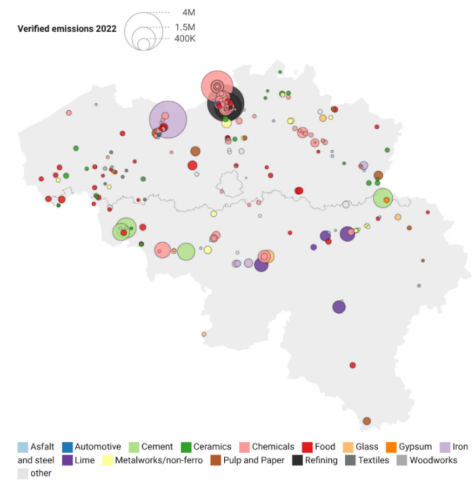
From a purely economic perspective, pipeline transport is generally the most cost-effective option in Belgium, given the relatively short distances between major industrial clusters. However, for inland emitters that are not directly connected to these clusters such as the Walloon industrial belt (Figure 5), alternative solutions such as CO₂ shipping or inland transport can provide flexible interim options. These multimodal solutions can enable early CCS deployment while pipeline infrastructure progressively expands.
Conclusions
CCS deployment is initially driven by a number of hard-to-abate CO2-intensive industrial sectors
TIMES-Be model results show that ammonia, ethylene oxide, steel and cement are the first sectors to deploy CCS, with capture emerging around the model period 2030-2035. These sectors are characterized by concentrated CO2 point sources (typically ≥ 15-20% CO2 in flue gas streams), as well as large and continuous emission volumes.
Early deployment of CO2 transport and storage infrastructure is a no-regret priority from a cost-benefit perspective in a carbon neutral trajectory
Industrial demand for CO2 transport and storage emerges already in the 2030–2035 period. Given typical CCS project development timelines, final investment decisions for infrastructure will need to be taken several years prior. Accelerating the deployment of CO2 supply chain infrastructure before 2030 can help de-risk industrial CCS projects and close the investment gap needed to incentivize further deployment across sectors.
Scenario analysis with constrained CO2 storage availability significantly increases industrial decarbonization costs
Counterfactual scenario analysis with significant constraints on CO2 storage availability shows that carbon capture cannot be relied on to abate industrial process and combustion emissions. Without CO2 storage, annual system costs rise by about 3.5 billion euros in 2050 compared to reference ROTORS scenario with 10 MtCO2/y storage. Paying for the entire chain of CO2 capture and storage costs approximately 2 b€ per year, but this is offset by avoided energy system costs amounting to 5.5 b€.
Hydrogen-related policy framework affecting industry influences CCS deployment and CO2 transport volumes
The European Renewable Energy Directive III (RED III) requirements affect hydrogen supply pathways in industry. Strict renewable fuels of non-biological origin (RFNBOs) rules favour hydrogen production based on renewable electrolysis and limit domestic blue hydrogen production1. Relaxing policy-imposed rules governing industry enables blue hydrogen technologies to play a direct role, increasing domestic hydrogen production and the associated volumes of captured and transported CO2, while reducing the total system cost (see also the Molecule Executive Summary).
Policy recommendations
Act now on CCS for hard-to-abate sectors -> prioritise CCS where it is required, particularly for CO2 process emissions in cement, lime, steel, refineries and selected chemical sectors, and for combustion-related CO2 emissions from non-renewable waste and by-product fuels. For these industries, CCS represents a no-regret decarbonization option and early deployment is needed to enable projects to become operational by 2030.
Leverage synergies with early emitters -> early movers can provide the initial CO2 volumes needed to kick-start transport and storage infrastructure (e.g. cement; blue hydrogen; see Molecules Executive Summary).
Build a CO2 network that connects clusters and inland industry -> develop a shared and demand-driven CO2 transport network connecting major industrial clusters, inland emitters and offshore storage. Industry should have access to relevant Flemish exit points (Ghent, Antwerp), and the 2040s should be the network expansion phase, not the starting point.
Secure access to transport and large-scale storage capacity -> cost-effective CCS deployment depends on timely access to transport and storage infrastructure. Belgian industry may require access to around 14–21 MtCO2/y by 2050, making early international cooperation and long-term agreements with North Sea storage providers essential.
Enable cross-border CO2 transport through Belgium -> Belgium’s geographic position and industrial infrastructure create opportunities to facilitate CO2 flows toward North Sea storage hubs. Strengthening cross-border connections can improve infrastructure utilisation and support regional carbon management.
Provide stable rules and de-risk early investments -> large-scale CCS deployment requires clear regulatory frameworks and financial mechanisms to unlock capture, transport and storage infrastructure. Transparent tariff structures, third-party access rules and risk-sharing instruments are essential to close the funding gap and support early projects.
Footnotes
1 Blue hydrogen is produced from natural gas using reforming technologies such as steam methane reforming (SMR) or autothermal reforming (ATR), combined with carbon capture (CC) to reduce associated CO2 emissions. Green hydrogen is produced through electrolysis powered by renewable electricity sources such as wind or solar energy. Pink hydrogen is produced through electrolysis using electricity and/or heat generated from nuclear energy.
2 CO2 transport costs via pipeline are modelled in a simplified way. Real costs for Belgium could be significantly different, without changing the main conclusions.
3 Based on IEA (2020) assumptions. Fuel costs represent approximately 44% of total shipping unit cost. Vessels are assumed to operate on conventional marine fuels, with shore power and battery use during port entry and departure. Decarbonised fuels are not explicitly considered.
4 Values are converted to 2024 EUR/tCO2 using historical U.S. dollar inflation adjustments and average 2024 USD–EUR exchange rate.
5 These values represent indicative transport costs within the TIMES-Be model and mainly include compression, transport and unloading. Actual tariffs may vary depending on transport volumes, infrastructure utilisation rates, and long-term contractual arrangements, particularly during early deployment phases when infrastructure is not yet fully utilised.
1 Blue hydrogen is produced from natural gas using reforming technologies such as steam methane reforming (SMR) or autothermal reforming (ATR), combined with carbon capture (CC) to reduce associated CO2 emissions. Green hydrogen is produced through electrolysis powered by renewable electricity sources such as wind or solar energy. Pink hydrogen is produced through electrolysis using electricity and/or heat generated from nuclear energy.
2 CO2 transport costs via pipeline are modelled in a simplified way. Real costs for Belgium could be significantly different, without changing the main conclusions.
3 Based on IEA (2020) assumptions. Fuel costs represent approximately 44% of total shipping unit cost. Vessels are assumed to operate on conventional marine fuels, with shore power and battery use during port entry and departure. Decarbonised fuels are not explicitly considered.
4 Values are converted to 2024 EUR/tCO2 using historical U.S. dollar inflation adjustments and average 2024 USD–EUR exchange rate.
5 These values represent indicative transport costs within the TIMES-Be model and mainly include compression, transport and unloading. Actual tariffs may vary depending on transport volumes, infrastructure utilisation rates, and long-term contractual arrangements, particularly during early deployment phases when infrastructure is not yet fully utilised.
References
ABN AMNO. (2025). Scenarios shaping EU ETS prices. ESG Economist. https://www.abnamro.com/research/en/our-research/esg-economist-scenarios-shaping-eu-ets-prices
AKT & VOKA. (2025). Call to Action: Kickstarting CCS in Flanders and Wallonia.
EEA. (2026). Belgium GHG inventories - 15th March Submission. EU Governance Regulation. EIONET Central Data Repository. European Environmental Agency. https://cdr.eionet.europa.eu/be/eu/govreg/inventory/envabgkpg/BEL-CRT-2026-V0.5-2024-20260311-132701_started.xlsx/manage_document
European Commission. (2024). Strategic Energy Technology Plan (SET Plan): Implementation Working Group on CCS and CCU. European Commission. https://setis.ec.europa.eu/working-groups/ccs-ccu_en
FPS Economy, SMEs, Self-Employed and Energy. (2025). Interfederal industrial strategy: Make 2025–2030. Government of Belgium. https://economie.fgov.be
FPS Health, Food Chain Safety and Environment. (2024). Coordination Committee for International Environmental Policy (CCIEP). Government of Belgium. https://www.health.belgium.be/en/professionals/administration-policy/environment/cciep
IEA (2020). CCUS in Clean Energy Transitions. International Energy Agency. https://www.iea.org/reports/ccus-in-clean-energy-transitions
IPCC. (2023). Climate Change 2023: Synthesis Report. Summary for Policymakers. H. Lee & J. Romero, Eds. Intergovernmental Panel on Climate Change. https://www.ipcc.ch/report/ar6/syr/downloads/report/IPCC_AR6_SYR_SPM.pdf
JRC. (2024). Clean Energy Technology Observatory: Carbon capture, utilisation and storage in the European Union – 2024 status report on technology development, trends, value chains and markets. European Commission. Joint Research Centre. Publications Office of the European Union. https://doi.org/10.2760/0287566
UNECE. (2022). Carbon capture, utilisation and storage (CCUS): Enabling industrial decarbonisation (Brochure). United Nations Economic Commission for Europe. https://unece.org/documents/2022/08/technology-brief-carbon-capture-use-and-storage-0
VDZ. (2024). Anforderungen an eine CO₂-Infrastruktur in Deutschland: Voraussetzungen für Klimaneutralität in den Sektoren Zement, Kalk und Abfallverbrennung. Verein Deutscher Zementwerke. https://www.vdz-online.de/fileadmin/wissensportal/publikationen/zementindustrie/VDZ-Studie_CO2-Infrastruktur-Deutschland.pdf
Wyns, T., Van der Perre, S. & Khandekar, G. (2025). DEEPIN — Deep Industrial greenhouse gas reductions in Belgium. Brussels School of Governance. VUB.
ABN AMNO. (2025). Scenarios shaping EU ETS prices. ESG Economist. https://www.abnamro.com/research/en/our-research/esg-economist-scenarios-shaping-eu-ets-prices
AKT & VOKA. (2025). Call to Action: Kickstarting CCS in Flanders and Wallonia.
EEA. (2026). Belgium GHG inventories - 15th March Submission. EU Governance Regulation. EIONET Central Data Repository. European Environmental Agency. https://cdr.eionet.europa.eu/be/eu/govreg/inventory/envabgkpg/BEL-CRT-2026-V0.5-2024-20260311-132701_started.xlsx/manage_document
European Commission. (2024). Strategic Energy Technology Plan (SET Plan): Implementation Working Group on CCS and CCU. European Commission. https://setis.ec.europa.eu/working-groups/ccs-ccu_en
FPS Economy, SMEs, Self-Employed and Energy. (2025). Interfederal industrial strategy: Make 2025–2030. Government of Belgium. https://economie.fgov.be
FPS Health, Food Chain Safety and Environment. (2024). Coordination Committee for International Environmental Policy (CCIEP). Government of Belgium. https://www.health.belgium.be/en/professionals/administration-policy/environment/cciep
IEA (2020). CCUS in Clean Energy Transitions. International Energy Agency. https://www.iea.org/reports/ccus-in-clean-energy-transitions
IPCC. (2023). Climate Change 2023: Synthesis Report. Summary for Policymakers. H. Lee & J. Romero, Eds. Intergovernmental Panel on Climate Change. https://www.ipcc.ch/report/ar6/syr/downloads/report/IPCC_AR6_SYR_SPM.pdf
JRC. (2024). Clean Energy Technology Observatory: Carbon capture, utilisation and storage in the European Union – 2024 status report on technology development, trends, value chains and markets. European Commission. Joint Research Centre. Publications Office of the European Union. https://doi.org/10.2760/0287566
UNECE. (2022). Carbon capture, utilisation and storage (CCUS): Enabling industrial decarbonisation (Brochure). United Nations Economic Commission for Europe. https://unece.org/documents/2022/08/technology-brief-carbon-capture-use-and-storage-0
VDZ. (2024). Anforderungen an eine CO₂-Infrastruktur in Deutschland: Voraussetzungen für Klimaneutralität in den Sektoren Zement, Kalk und Abfallverbrennung. Verein Deutscher Zementwerke. https://www.vdz-online.de/fileadmin/wissensportal/publikationen/zementindustrie/VDZ-Studie_CO2-Infrastruktur-Deutschland.pdf
Wyns, T., Van der Perre, S. & Khandekar, G. (2025). DEEPIN — Deep Industrial greenhouse gas reductions in Belgium. Brussels School of Governance. VUB.